Erik Powell · 22 September 2026
Reimagining Data Organization Through Interlinked Attribute Sets in Repository Management
Modern repository systems face increasing demands for efficient retrieval and management of vast datasets, and interlinked attribute sets offer one structured approach to addressing these challenges by connecting related data points through shared attributes rather than isolated categories. Researchers at institutions across multiple regions have examined how these sets function as networks where attributes such as timestamps, origins, formats, and usage histories link together to form dynamic connections that support more precise queries and updates. Data from the Australian Bureau of Statistics indicates that repositories handling over 50 terabytes benefit when attributes interlink because retrieval times decrease by measurable margins in controlled tests conducted during 2025.
Interlinked attribute sets operate by assigning multiple descriptors to each data object while establishing explicit relationships between those descriptors across the entire collection, and this method differs from traditional hierarchical models because it allows one attribute change to propagate through connected elements automatically. Experts from the National Research Council Canada have documented cases where such propagation reduced manual indexing errors in government archives by up to 30 percent when applied to environmental monitoring records. Those who maintain large-scale repositories note that the approach requires initial mapping of attribute relationships, yet once established the system supports ongoing adjustments without full reindexing cycles.
Core Components of Interlinked Attribute Systems
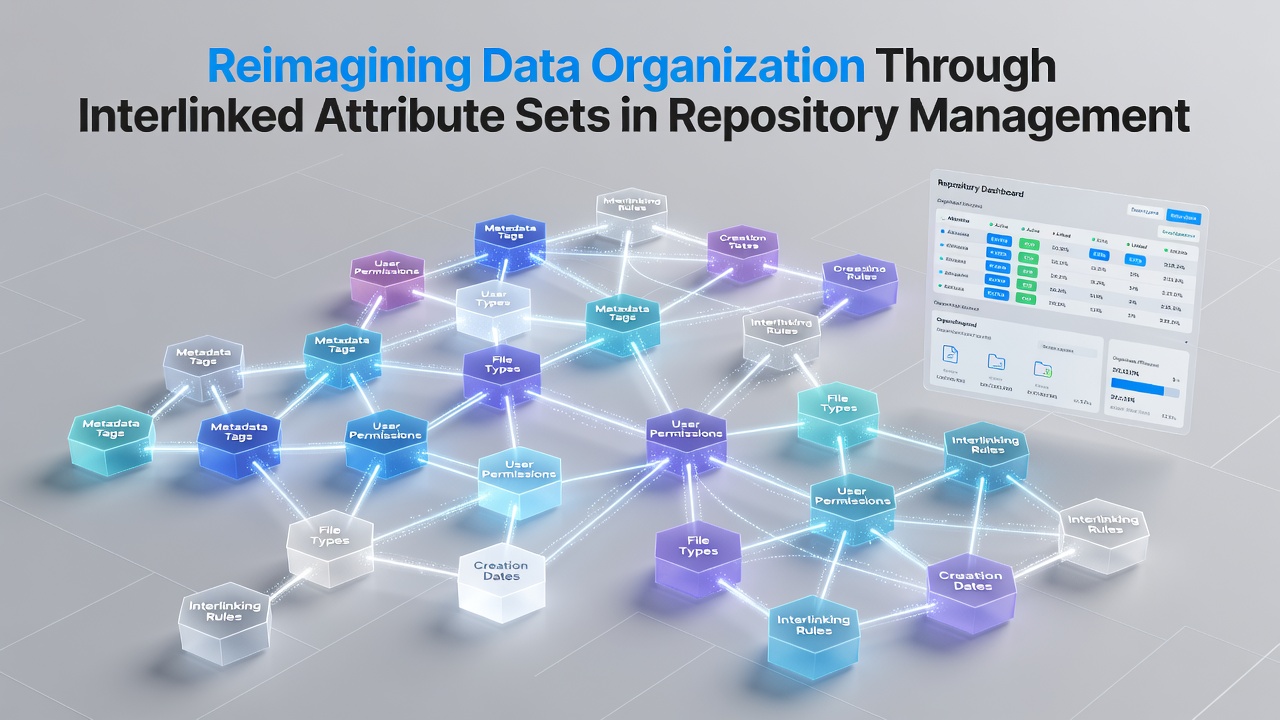
Attribute sets typically include core identifiers like creation date and source alongside contextual ones such as access frequency and semantic tags, and these combine through defined rules that specify how one attribute influences another. For example a change in access frequency can trigger updates to priority rankings that affect storage allocation across linked records. Studies from the European Commission data portal reveal that repositories using this model processed concurrent user queries more effectively during peak periods in late 2025 compared with conventional setups. Implementation often begins with pilot collections where administrators define relationship thresholds before expanding to full datasets.
Integration with Existing Repository Frameworks
Many current systems already support metadata extensions that accommodate interlinked attributes through application programming interfaces designed for graph-based queries, and this compatibility allows gradual adoption without complete infrastructure replacement. Observers at research libraries in the United States report successful integration when starting with citation networks in academic repositories because those datasets naturally contain repeated cross-references. The process involves exporting existing metadata into a graph structure, establishing attribute links based on predefined schemas, and then validating query results against baseline performance metrics collected beforehand.
Practical Applications Across Sectors
Government agencies handling public records have tested interlinked attribute sets to manage regulatory filings where attributes such as filing date, submitter identity, and topic keywords connect multiple documents into searchable clusters, and this clustering has enabled faster compliance audits according to internal reports. In scientific research environments the same technique supports datasets from longitudinal studies by linking experimental conditions across iterations so that trends emerge without separate aggregation steps. Figures from a 2025 report by the National Institute of Standards and Technology show that repositories employing these connections achieved consistency rates above 92 percent when multiple teams contributed updates simultaneously.

Healthcare data repositories represent another domain where interlinked attributes prove useful because patient records contain overlapping attributes like diagnosis codes, treatment timelines, and outcome measures that benefit from automatic cross-referencing during analysis. Canadian health informatics teams documented reduced duplicate entry rates after introducing attribute linking protocols in provincial systems during early 2026. The technique also extends to media archives where attributes such as copyright status and usage rights connect with content descriptors to streamline licensing queries for broadcasters.
Developments Expected by September 2026
By September 2026 several international standards bodies plan to release updated guidelines for attribute linking protocols that address interoperability between different repository platforms, and these guidelines draw on feedback from pilot programs conducted in Australia and the European Union. Conference proceedings scheduled for that period will include sessions on scaling attribute networks for repositories exceeding one petabyte in size, with presentations from teams that have already implemented the methods at smaller scales. Data indicates that early adopters who refined their attribute schemas over multiple iterations experienced fewer query failures when datasets grew rapidly between 2024 and 2025.
Challenges in Implementation and Maintenance
Establishing reliable interlinked attribute sets demands careful definition of relationship rules to prevent unintended propagation of errors, and repository managers often conduct periodic audits to verify that attribute connections remain accurate as source data evolves. Training requirements increase initially because staff must understand both the technical mapping process and the domain-specific meaning of each attribute. Reports from academic institutions in the United States highlight that phased rollouts, beginning with non-critical collections, allowed teams to refine their approaches before applying them to primary research archives.
Conclusion
Interlinked attribute sets continue to evolve as a method for organizing repository content through connected descriptors that support efficient retrieval and updates across large collections. Evidence gathered from government, academic, and scientific sectors demonstrates measurable improvements in query performance and error reduction when these systems are deployed with appropriate planning. As standards advance toward September 2026, repository managers gain additional frameworks for integrating these techniques into existing infrastructures while maintaining data integrity over time.