Katja Krause · 6 October 2026
Tracing the Evolution of Interconnected Search Filters in Contemporary Knowledge Management Systems
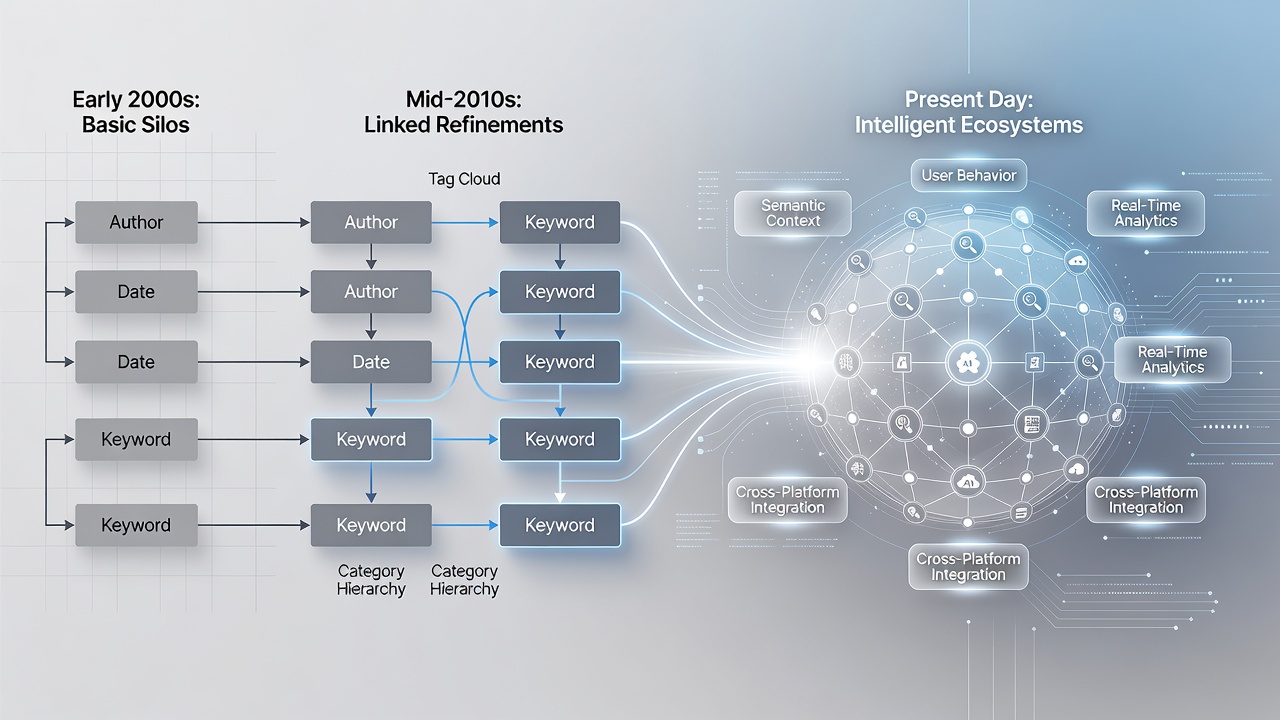
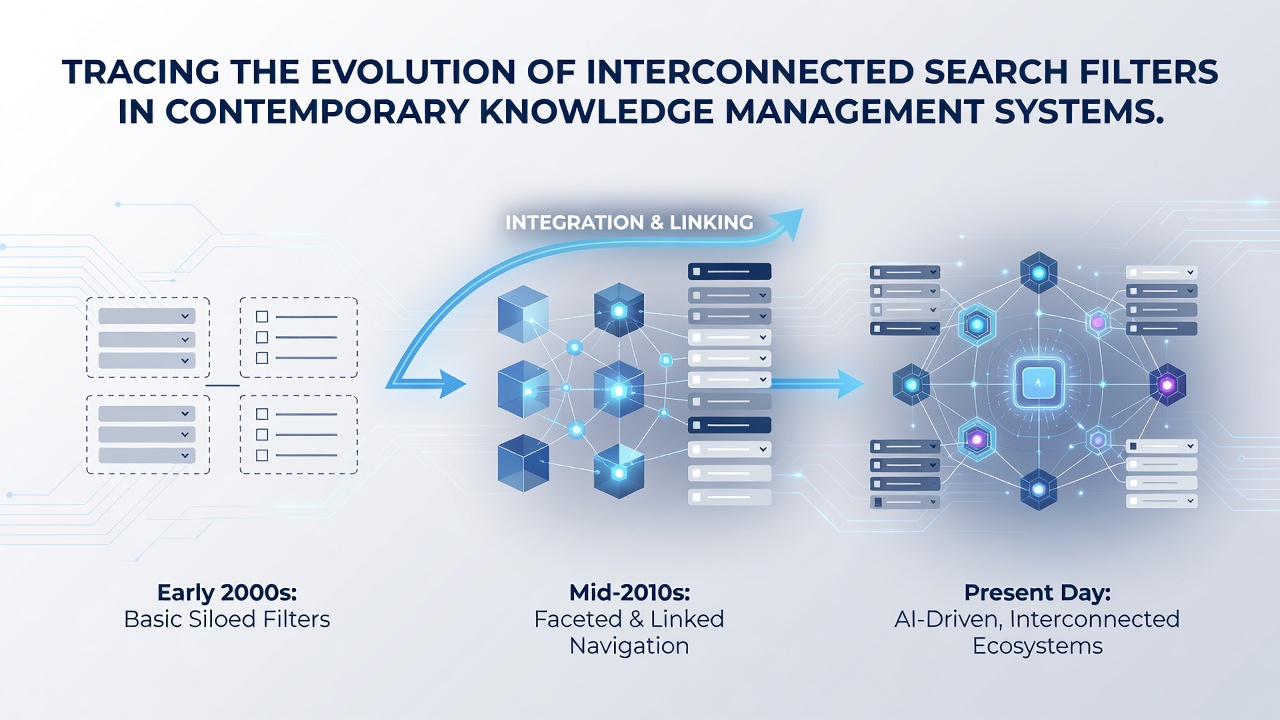
Knowledge management systems have shifted from basic keyword matching to networks of interconnected search filters that link attributes across large datasets, and observers note this progression reflects broader changes in how organizations handle information retrieval since the late 1990s.
Foundations in Early Digital Repositories
Initial systems relied on simple indexing and linear queries, yet researchers at institutions like those affiliated with the National Institute of Standards and Technology documented how early database architectures already hinted at attribute-based refinement when users needed to narrow results by date, author, or category. Data from government records projects in the United States during the 2000s shows these filters operated in isolation, without the cross-referencing that later became standard.
By the mid-2000s, enterprise platforms began incorporating multiple filter dimensions simultaneously, and studies from Canadian federal information management initiatives revealed measurable gains in retrieval speed when filters shared underlying metadata structures rather than functioning independently.
Expansion Through Linked Attribute Networks
Interconnected filters gained traction as knowledge graphs and ontology layers entered mainstream use, allowing one selection to influence available options in adjacent categories automatically. This approach appears in deployments across European Union digital archives where linked data standards enabled dynamic updates to filter sets based on real-time query context.
Figures from academic analyses conducted through 2025 indicate that systems employing these networks reduced redundant user actions by connecting related attributes such as topic, source reliability, and temporal relevance into unified pathways, and this pattern continued into October 2026 with further refinements in graph database integrations.
Integration of Semantic and Real-Time Capabilities
Contemporary platforms now embed machine learning models that predict and adjust filter interconnections based on usage patterns, while Australian government digital transformation reports highlight how these models draw from aggregated query logs to surface previously hidden relationships between content types. Observers note that such adjustments occur without manual reconfiguration, enabling filters to evolve alongside organizational data growth.
Evidence from industry surveys conducted through mid-2026 points to widespread adoption in sectors requiring compliance tracking, where interconnected filters link regulatory tags directly to document versions and access histories, streamlining audits that once demanded separate searches across disconnected modules.
Practical Deployments and Measured Outcomes
One documented rollout at a multinational research consortium connected publication metadata with project funding attributes and collaboration networks, allowing users to traverse from a single topic filter to related personnel and budget details without restarting queries. Similar configurations appear in healthcare knowledge bases where treatment protocols interconnect with patient outcome data and regulatory updates through shared attribute layers.
Those who have tracked these implementations report consistent patterns in which filter networks scale by inheriting connections from parent ontologies, and this inheritance reduces maintenance overhead as new data categories enter the repository.
Conclusion
Tracing these developments shows a clear trajectory from isolated controls to interdependent networks that adapt with the underlying information, and records through October 2026 confirm continued expansion into predictive and cross-domain applications. Organizations continue to refine these systems by drawing on standards from multiple regulatory regions while maintaining focus on verifiable attribute linkages that support precise retrieval across expanding data volumes.